How is the packaging and container market evolving? Answer with Sylvia Ardouin
Claire Gallic
10 minutes

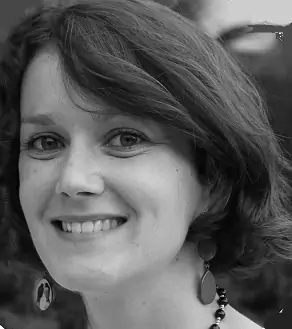
Marketing and Digital Director, Sylvia Ardouin worked for 16 years at Tupperware. One can say that she knows a lot about packaging and containers. A great observer of consumption trends, she brings us a very informed and sharp perspective on this world in profound mutation.
YOU WORKED FOR MORE THAN 16 YEARS AT TUPPERWARE, WHAT EVOLUTIONS HAVE YOU BEEN ABLE TO OBSERVE REGARDING PACKAGING AND CONTAINERS?
Whether it is about packaging or containers, I would say that they have adapted to various transformations, particularly the new modes of consumption.
The market for containers has evolved significantly and is very dynamic for two essential reasons. Firstly, consumption modes. They have changed more in the last ten years than in the previous two hundred. For example, we have observed a strong evolution in the category of On The Go. All forms of food consumption outside the home have greatly evolved packaging and containers.
Next, we have observed the first effects of the strong awareness raised regarding anti-waste. Thanks to powerful communication from the media, companies, and the government, we have seen a growing awareness. Today, we transform, cook, consume, preserve, and re-transform to consume again. The Covid health crisis has greatly helped as the French have rediscovered the taste for cooking and homemade food more than ever. Generally, we are still far from an eco-responsible approach and unfortunately remain far too much in over-packaging.
The demographic evolution with the increase in the number of individuals living alone and the fact of consuming much more frequently outside one’s home have largely contributed to the development of individual portions, which is by nature the number 1 ecological enemy.
Among the new consumption modes, we must not forget the emergence of bulk and the questions it raises regarding packaging and containers.
And finally, more recently, if we step outside food, the explosive growth of e-commerce with home delivery and fast delivery adds significant challenges within supply chain strategies.
All these evolutions lead companies to question and renew themselves and to seek new solutions, but not all are capable of providing real answers as it represents very heavy investments, particularly in R&D and execution.
CAN DATA AND DIGITAL ACCOMPANY THE TRANSFORMATION OF THE ENTIRE LIFE CYCLE OF PACKAGING POSITIVELY?
I would say yes, of course. In any case, data and digital can only have a positive impact as they provide us with extremely convincing elements on consumption modes. What I mean is that everything that is quantified is indisputable. So yes, data and digital, regarding packaging and containers, indeed have an effect that allows brands and manufacturers to be much more relevant in their offerings. As long as we know better the habits of different types of consumers, we can adapt not only the containers (size, shape...), but also their functionalities.
Beyond the food container, regarding packaging in a broader sense, the strong growth of e-commerce and the significant costs represented by delivery fees, data and digital allow the implementation of new systems that determine, for example, at the customer's order, the size of the box based on the weight and size of the sold product(s). We have all experienced this absurdity of receiving a huge box for a tiny product.
In this context, data and digital will enable us to be more efficient and more eco-responsible. But again, this must be accompanied by significant digital maturity and heavy investments for companies.
WHAT ARE THE CURRENT BARRIERS TO THE DEVELOPMENT OF ECO-DESIGNED PACKAGING?
Well, I would say that the current barriers are mainly financial, whether in the way of dealing with the life cycle of packaging or the price of the base materials to produce eco-responsible containers. These are again major challenges for manufacturers. Innovation is also a barrier because we are still at the beginning, but raw materials to manufacture eco-designed containers are available, albeit in small quantities, and we will need to be able to produce them on a large scale quickly.
Some companies are progressing quickly, but not sufficiently, given all that we continue to produce as packaging waste, and we know that we have an ecological clock ticking that will not wait. Our capacity to produce and recycle packaging is not sufficiently large. This issue is crucial because we cannot continue to produce more and be unable to recycle more. When I say recycle, it is not simply handling our waste; it is recycling into new containers that are “adapted to needs”, “eco-responsible”, “eco-innovative”, and “infinitely reusable”.
There are many barriers, but there are also many initiatives, sometimes very radical, that are probably not supported and promoted enough today. I am thinking in particular of “zero packaging”; bulk and bulk management. There are still many initiatives that have been implemented by brands and distributors. The problem is that today, bulk distribution is still too confidential. I believe that bulk has not yet quite found its format. The supply and distribution remain very constraining for the consumer who is not always rewarded for his efforts. And, it is not always highlighted.
Today, some brands and retailers offer bulk, but this raises many questions from consumers: why is bulk often confined to organic brands? Why are prices not significantly lower compared to other packaged equivalent products?
Under these conditions, it is not surprising that bulk has not yet found a wider audience.
THE PACKAGING OF THE FUTURE LOOKS LIKE...
The packaging of the future. Well, I think it is the one we do not want to throw away, quite simply! The one we want to keep because it has limitless utility and withstands the test of time. For me, the packaging of the future is the one that is usable, reusable, and infinitely RECYCLABLE.
And then, lastly, the packaging of the future must be accessible to all, geographically and financially.
In conclusion, the packaging of the future is the one that is convenient, multi-use, eco-friendly, and from which we would not want to part for anything in the world!
This interview is part of our special report on packaging.