👋 Clubhouse, a little tour of the owner

Charline Flochlay
10 minutes
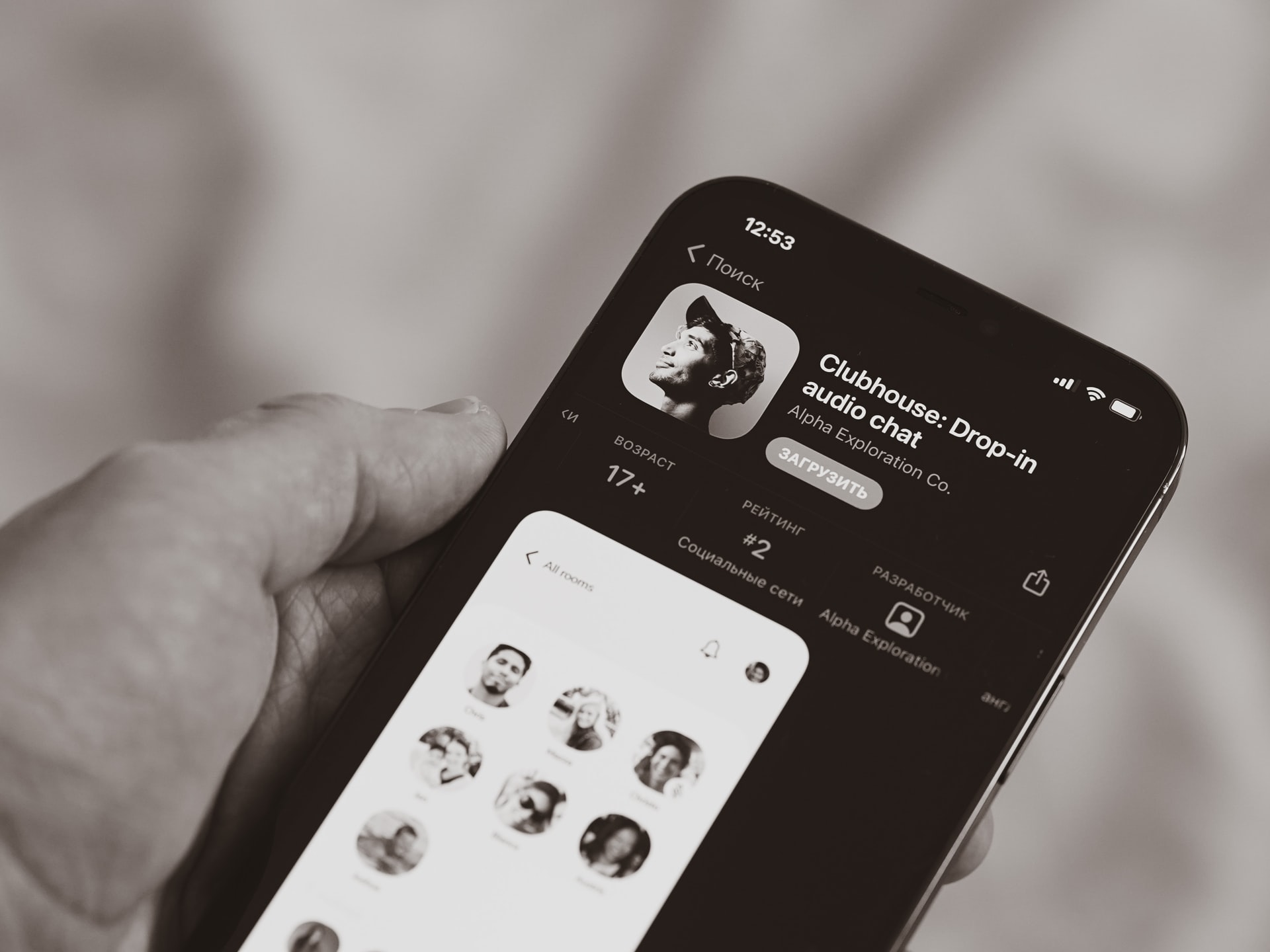
Elon Musk, Drake, Oprah Winfrey, Jamel Debbouze, Benjamin Griveau… ClubHouse has managed to attract celebrities and influencers, but what about the place of brands on the platform?
Clubhouse is a social network based solely on audio. The application, still in private beta, has been experiencing growing success since its creation in March 2020.

CLUBHOUSE IN A FEW FIGURES
Worldwide, the number of active users per week on Clubhouse rose from 600,000 in December to 2 million in January, reaching 10 million in February. France is currently lagging behind, with 90,000 downloads in May 2021, but the arrival of celebrities like Jamel Debbouze, leaders in French tech, or politicians like Benjamin Griveau could bridge this gap.
HOW TO EXPLAIN THIS SPIKE IN POPULARITY
CREATING BUZZ
The application is used via “rooms” of discussion open to all, where users can listen, participate, and share their opinions. With smart communication and an elitist functioning, Clubhouse has managed to attract celebrities and influencers to its platform, who in turn have drawn thousands of users. The surprise appearance of Elon Musk gathered more than 5,000 people in the same room (initial limit gauge), leading to the creation of secondary listening rooms and relays on streaming platforms.
SENSE OF EXCLUSIVITY

(Photo by Nathana Rebouças on Unsplash)
Clubhouse is an application still in private beta, initially available only on iOS, and since May 9, on Android. The creators of the application assure that it will soon be open to everyone, but for now, the platform continues to operate on an invitation system. Thus, either the future user signs up on a waiting list to receive an invitation via SMS, or current users invite them. Indeed, once registered on the application, each user automatically receives a certain number of invitations to share with their network. With the rise of the application, a real traffic of invitations has developed, with resale prices ranging from $20 to $50, sometimes reaching $125 on eBay.
FEAR OF MISSING OUT (FOMO)
On Clubhouse, interventions in discussion rooms are all live, and it is impossible to record them. This means that every speech is unique, and one must be present to witness it. This is where the phenomenon of FOMO, “the fear of missing out,” arises. Users then develop a kind of addiction to Clubhouse that is gaining in popularity.
WHAT COULD HARM CLUBHOUSE
CONTENT QUALITY
With a growing population on its platform, Clubhouse will have to ensure the quality of the content offered. Indeed, the more users the application has, the more rooms created and speeches will increase. Although the application is currently recognized as a source of quality content, it is also at risk of decreasing quality with each new user. However, if Clubhouse wishes to generate revenue from advertising, it will need to find a balance between content quality and strong growth. To counter this phenomenon, the application allows each user to create a maximum of two clubs.
There will also be a wait before the creation of a club, with a waiting list of three to four weeks.
MODERATION AND SECURITY
Just like live streaming applications (like Twitch), live audio is a tool that is difficult to moderate, especially when each speech is spontaneous and not recorded. Many incidents related to racism and harassment have already occurred. Clubhouse assures that it is working on improving the safety of its users, but must activate more robust tools in line with the exponential increase in the number of users.
On March 12, the CNIL questioned the company that edits the application about the measures taken to comply with GDPR. Currently, there are claims that the application suffers from a massive leak of personal data from 1.3 million users. This remains to be proven as Clubhouse defends that this information was already publicly available.
COMPETITION

(Spaces is here, blog.twitter.com)
The success of Clubhouse has not gone unnoticed by social media giants: Facebook and Twitter quickly seized the opportunity of this new way to socialize online. The blue bird announced the launch of its live audio platform Spaces in December 2020, directly integrated into its application. Like Clubhouse, Spaces plays on its exclusivity: only accounts with more than 600 followers can host a conversation. The application is also already working on compensating its creators and refining its moderation.

(Live Audio Rooms, about.fb.com/news)
Facebook has also quickly shown its interest in Clubhouse, with Mark Zuckerberg's presence in certain rooms since the launch of the application. In April 2021, the social network announced several launches of innovations on its Facebook, Messenger, and WhatsApp applications, all centered around the use of audio. Podcasts, enhanced audio sharing capabilities, and also Live Audio Rooms, its live audio solution. The application will allow its creators to turn a live conversation into a podcast that everyone can listen to later.
MARKETING POTENTIAL
THE “CREATOR FIRST” PROGRAM
The goal of this program is to help and equip recognized creators on the application. Through a registration request for the program (until March 31, 2021), selected creators will be able to receive new phones, AirPods Pro to enhance their content, have creative meetings with the ClubHouse teams, receive design services… They will also have access to financial support as well asconnections with brands.
These brands have already begun sponsoring creators outside of the program, like Martell Cognac in the United States: “By partnering with an influencer to connect with consumers on Clubhouse, we are able to leverage the integrated Clubhouse community and invite new users to participate authentically through the reach of our influencer partners. ”
POSITIONING AS A CREATOR
ClubHouse is currently an application without apparent advertising. However, brands could share their expertise by creating their own rooms on which they can enhance their presence, maximize their audience, and strengthen their connections with this community of engaged users.
Feed. a brand offering balanced gourmet meals and snacks is an example of good use of the platform. The manager has rapidly seized on the success of Clubhouse. According to him, his brand has become a medium. They host at least three rooms a day on the application, inviting experts on targeted topics while also addressing very general themes. Discussions come alive with a thirty-minute exchange, after which users can intervene and engage in the conversation. “Compared to Instagram where it is very difficult to create a true close connection with audiences, Clubhouse is very much in tune with our target: young urbanites eager to exchange on a variety of topics like food, sports, or entrepreneurship. We do not position ourselves as a food brand (…). We position ourselves as a means to excel in achieving one's goals, and want to be an inspiring brand that offers its subscribers quality content. This is what later differentiates us from the competition.” Clubhouse has become a major axis of Feed's content strategy, with 10,000 users in some rooms, and a consistently increasing number of subscribers.

(Feed's Facebook account)
We can expect the application to unveil new features in the coming months. It will continue to follow its approach of highlighting creators, through the promotion of their content or through new ways of compensation such as Clubhouse Payments, which allows users to send money directly to them.
Sources: Techcrunch, Clubhouse, Statista, Highsnobiety, e-marketing, le Monde, Backlinko, Digiday, blog.twitter.com, Facebook